
Erie County's Multi-Day Log Sources
No official Erie County page offers a fixed 72-hour or seven-day booking archive. The Sheriff's official Glyph search is the main report route instead. It searches by Report Number or Party Name. Filters narrow the field. Date Range, Report Type, and a Report Date or Upload Date choice all help. The companion dispatch log tracks calls and activity. It is no complete arrest blotter.
Local reporting fills in some of the story. The Sandusky Register Daily Log is one source. It carries selected Sandusky Police activity. Vermilion Daily publishes chief's-desk blotters in editions covering one week or sometimes two. Neither is official booking history. Neither should be read as complete.
Read the Erie County Police Blotter
Start with what the log itself can answer: what one agency or publisher reported across a stated span. Custody and the final court outcome stay separate checks.
- Choose the official Glyph report search or a named local blotter and record its source.
- Read the incident window in the item, not just the webpage's publication date.
- Separate Report Date from Upload Date when using Glyph.
- Note the agency, location, report number, charge wording, and any stated transport.
- Check the live JDS roster only to see whether the person is currently posted in Erie County Jail.
- Use the named court for later disposition and request the agency record when the online window is too narrow.
A same-day question points to the 24 Hour Arrests guide. That guide tracks roster freshness and a newly processed booking. This page works the other way. It moves backward through dated police activity and published summaries.
The official Erie County Sheriff Glyph interface displays the report number, party name, and date-range controls. It also offers the report or upload date choice.
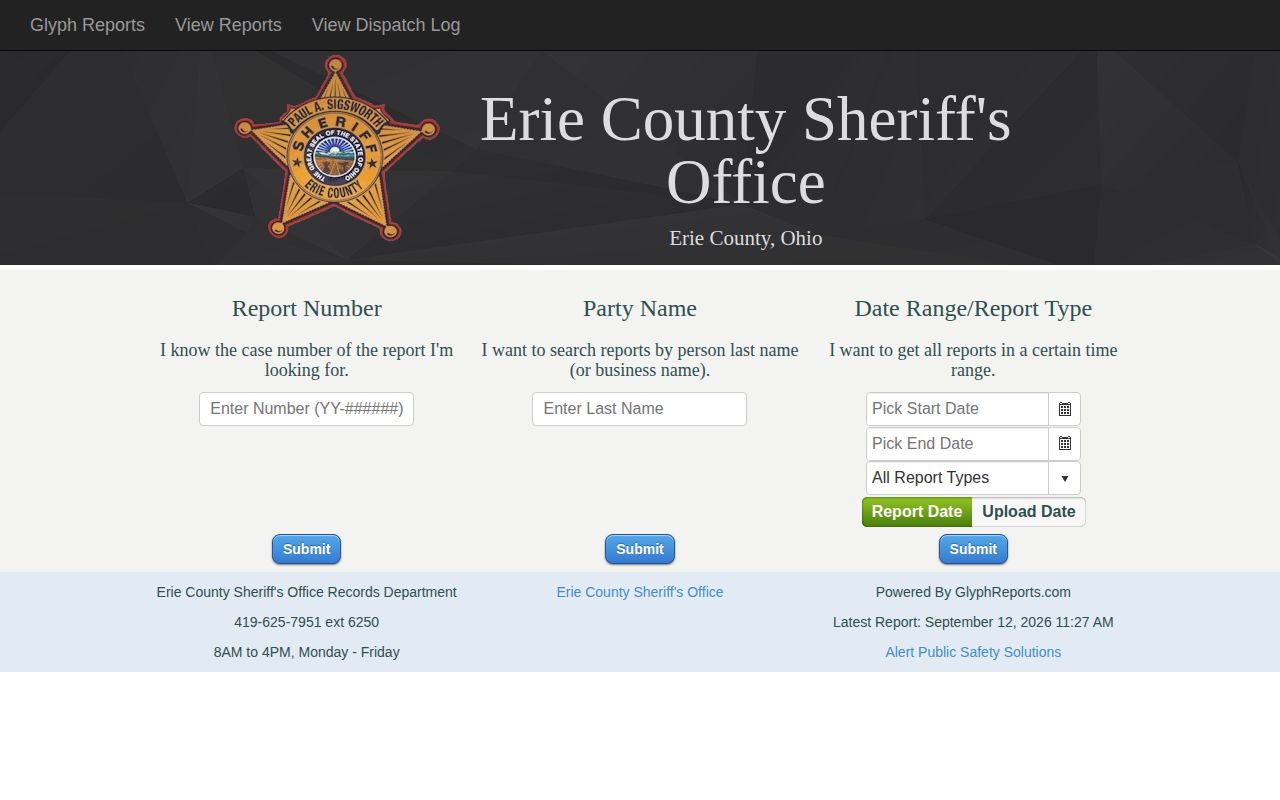
Those controls find agency reports. They do not turn Glyph into a list of everyone booked over several days.
What Erie County Log Entries Mean
Fields vary by source. An agency report search and a newspaper blotter promise quite different levels of detail.
| Field | How to read it |
|---|---|
| Incident date and time | When the described police activity occurred, if supplied. |
| Publication date | When a news outlet posted the summary, which can be later. |
| Report Date | The date tied to the agency report in Glyph. |
| Upload Date | When a report reached the online interface, not necessarily when events occurred. |
| Agency and location | Who handled the activity and the place described by the source. |
| Narrative | A selected account that may omit protected facts or later developments. |
| Charge or arrest statement | An charge or reported police action, not a conviction. |
| Transport or jail reference | A statement about the route at that time, not proof of present custody. |
| Booking fields | Jail ID, Book Date, court, and custody details belong to JDS, not most blotters. |
The local news logs carry no booking photos. The official JDS roster may show an inline photo on an accessible adult current-custody record. Neither source is a gallery, and no image belongs copied from either one.
Vermilion's Arrest Window Is Not Fixed
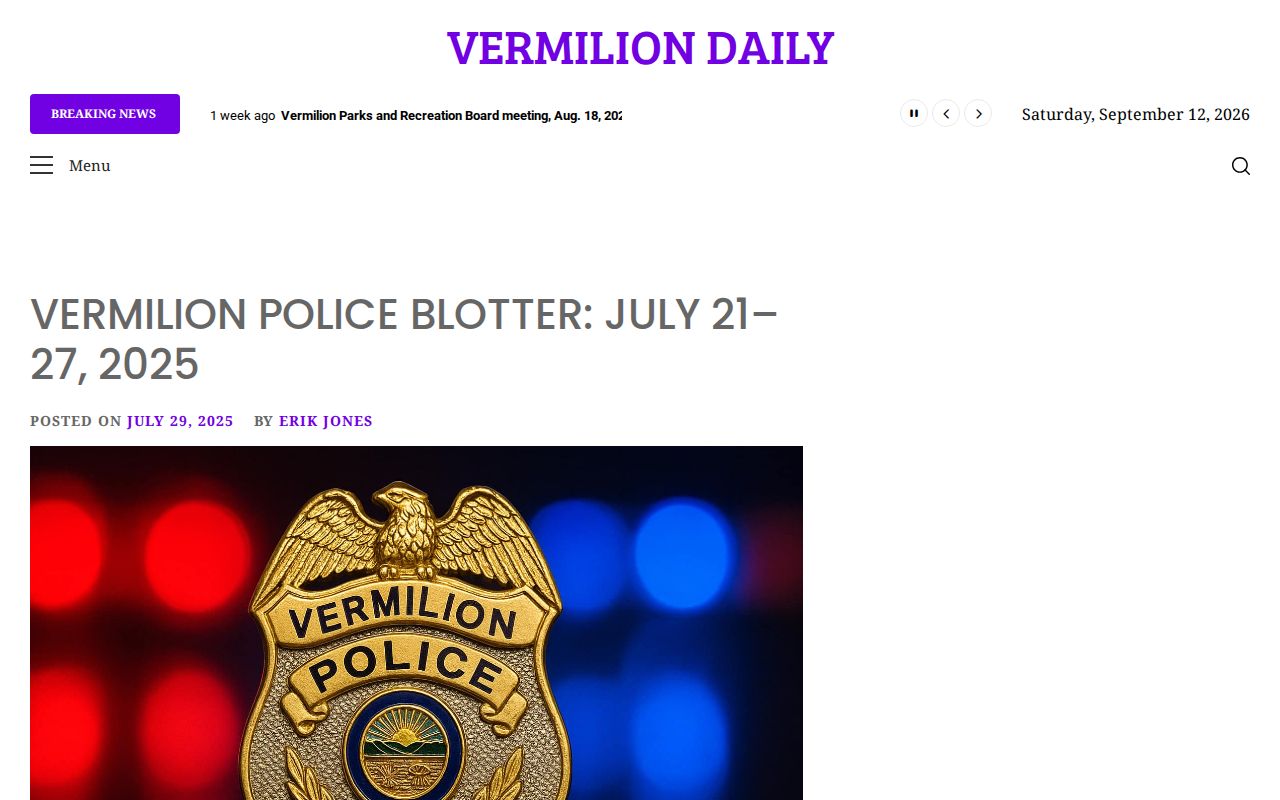
The Vermilion Daily police blotter for July 21 through 27, 2025 uses dated, time-and-location narratives. One entry describes transport to Erie County Jail. Another edition spans September 1 through 14, 2025. Later examples run October 20 through November 2, 2025, and June 1 through 8, 2026. The pattern is irregular. Publication comes weekly or biweekly. It is not a guaranteed rolling feed.
The Vermilion Daily weekly blotter page shows this date window and narrative form plainly.
An article can keep context a roster lacks. Its selected stories and dates still are not a full county arrest count. Vermilion also spans two counties. It sits in both Erie and Lorain, so verify the agency, jail, and court rather than search by place name alone. A Vermilion arrest report never promises Erie County custody.
Sandusky Daily Log Versus Booking Records
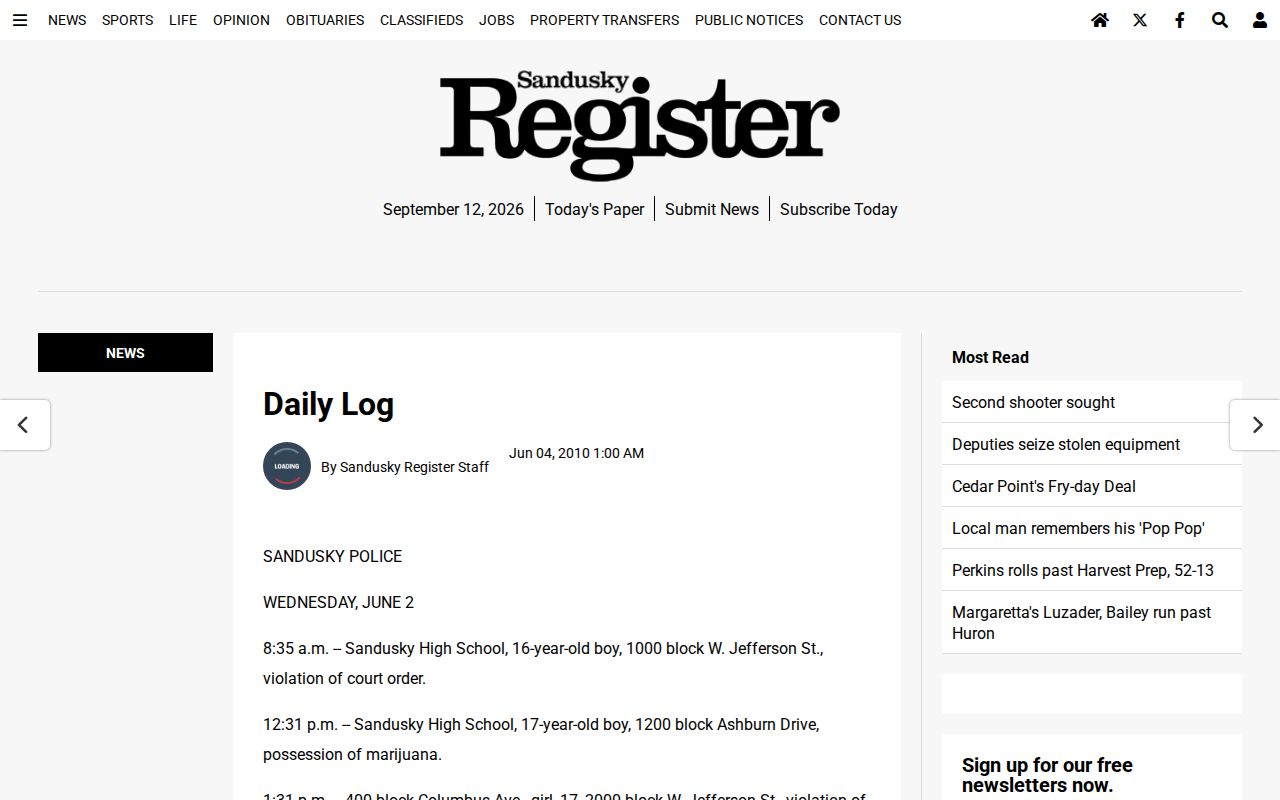
The Sandusky Register Daily Log stands out locally. It is the strongest daily city activity publication in the area, presenting Sandusky Police material that may summarize dispatch or incident activity. It is not a booking roster. A daily label also promises no permanent archive depth.
The Sandusky Register Daily Log page itself displays its publication layout.
Treat the date and narrative as a lead. Then go back to the agency, JDS, and the court. News moves on its own clock. Coverage may say someone was arrested after the event. It may skip a later dismissal or run before jail processing finishes. A multi-day log finds events; it does not settle current custody.
Erie County Weekend Posting Gaps
JDS, Glyph, and the local blotters make no promise of weekend or holiday posting. Events from several days may upload or publish later. One source can look quiet while another lags behind. The gap is timing, not crime.
Search the full weekend span in Glyph. Compare Report Date with Upload Date. Read the local article's incident range, and consult the current roster only for people still displayed. The court record settles the outcome. These steps keep an upload pattern from turning into unsupported crime-trend claims.
Erie County Arrest Records Beyond the Log
A retention schedule governs what the Sheriff keeps. It applies once a web log entry fades from view. It points to specific record series. Inmate count sheets stay for two years. Inmate files are held two years after release. Jail registers are permanent, and prisoner booking-video discs last 30 days when nothing is pending. Those periods describe what the office archives. They do not say how long a JDS entry or booking photo stays visible online.
For a specific report or booking sheet, contact the Sheriff's records custodian. Name the series you want. The ECSO Glyph Records Department takes calls at 419-625-7951 extension 6250, weekdays from 8 a.m. to 5 p.m. Ohio Revised Code 149.43 sets the public-records route, with exemptions and lawful redaction allowed. A good request includes a name, date, Jail ID, report number, or agency. The office will not build a new analysis for you.
History adds another layer. Bowling Green State University's Erie County guide lists sheriff jail registers running from 1909 through 1963. The Ohio History Connection explains the state archival program. Old registers suit historical work rather than checking on any current arrest.
Official Records Before Third-Party Archives
Start with official sources. ECSO Glyph holds reports, JDS shows current jail custody, the arresting police agency keeps its own record, and the court handles disposition. Third-party county pages sometimes keep longer date indexes than Erie County does. Their depth is not the county's retention policy, though.
Commercial archives differ in shape. RecentlyBooked described a last-30-days view. Ohio Arrests built day-by-day booking-report pages, and other sites offered month or deep page navigation. All of them can run late, go stale, duplicate entries, or match the wrong person. Treat them strictly as discovery aids. Their photos and person lists are not reproduced here, and the county and the court remain the places that verify the facts.