
Erie County Recent Arrest Sources
Every Erie County arrest search starts in one place. The Erie County Sheriff's Office hub gathers the county's lookup tools. It links the Jail Data Systems roster, the Glyph report search, the dispatch log, the warrant list, and Most Wanted notices. Each tool answers a different question. JDS lists people held in the Erie County Jail right now. Glyph tracks reports and public-safety calls. A court docket shows where a case goes next. No single list covers every agency and every custody outcome in the county.
When someone may have been booked, check current custody first. If the arrest just happened, use the arresting agency's report route. You can also call the Jail Division at 419-627-7569. The 24 Hour Arrests page covers same-day options. Erie County posts no clearly labeled 24-hour booking feed. The Arrest Log separates dated police activity and local blotters from jail custody. Booking charges can change in court.
The official sheriff hub shows how Erie County groups these entry points:
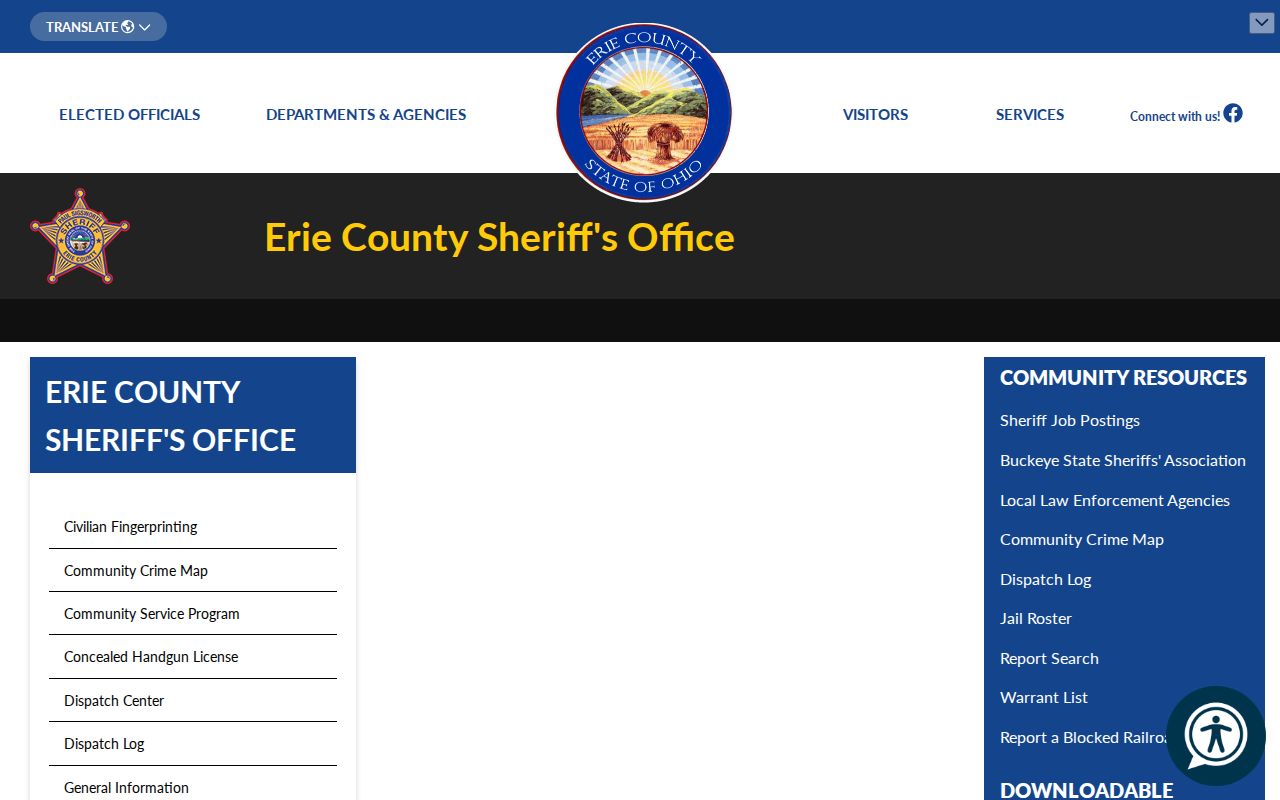
This is a navigation aid, not a list of arrests. Open the live sheriff page for current links and notices.
Current Custody Is Not 24 Hours
The JDS page shows a run date and time. Its scope is current custody, not 24 hours. A person booked weeks or months earlier can still appear if they remain held. Someone cited, released before display, transferred, held elsewhere, processed as a juvenile, or entered under a spelling variation may not appear at all. A blank search proves nothing. And an old booking date is not a fresh arrest just because the record stays visible.
| View | Actual window | Best use | Photos |
|---|---|---|---|
| JDS roster | Current posted custody, not fixed at 24 hours | Confirm a person is listed in Erie County Jail | May show an inline booking photo |
| County Glyph dispatch log | Live activity; fixed booking span not documented | Check calls and agency activity | Not a booking-photo feed |
| Local police blotters | Selected daily, weekly, or biweekly coverage | Read incident context | Not a dependable photo source |
| Court search | Case history; online data may lag | Find hearings and final disposition | Not a mugshot roster |
What if the booking just happened? Give processing time, check the roster timestamp, then call the jail. A dispatch entry is not proof of a booking.
Search Erie County’s Jail Roster
The sheriff's JDS New Inmate Roster is the main official custody source for Erie County. The system offers no separate name-search box. Load it, then use your browser's Find command on the last name. Compare several fields after that. Similar names, repeat bookings, and spelling differences make a name-only match weak evidence.
| Roster field | How to use it |
|---|---|
| Name and Jail ID | Identify the posted jail record; a Jail ID is not an ODRC number. |
| Book date | Shows when jail intake was recorded, not the court outcome. |
| Charges and court | Shows charges as booked and the likely court route. |
| Disposition and bail | Describes the current posture, not final guilt. |
| Attorney and court date | Helps connect the jail entry to the correct case. |
| Arresting agency | Distinguishes sheriff, city police, township police, and state patrol. |
| Photo and release date | May show an identification image and release data when populated. |
- Open the live roster and note its run timestamp.
- Use browser Find for the full or last name.
- Match Jail ID, book date, agency, court, and other details.
- If absent or unclear, call the Jail Division at 419-627-7569.
- Check the court docket before drawing a conclusion.
The official roster capture documents its timestamp, field layout, and Photo column:
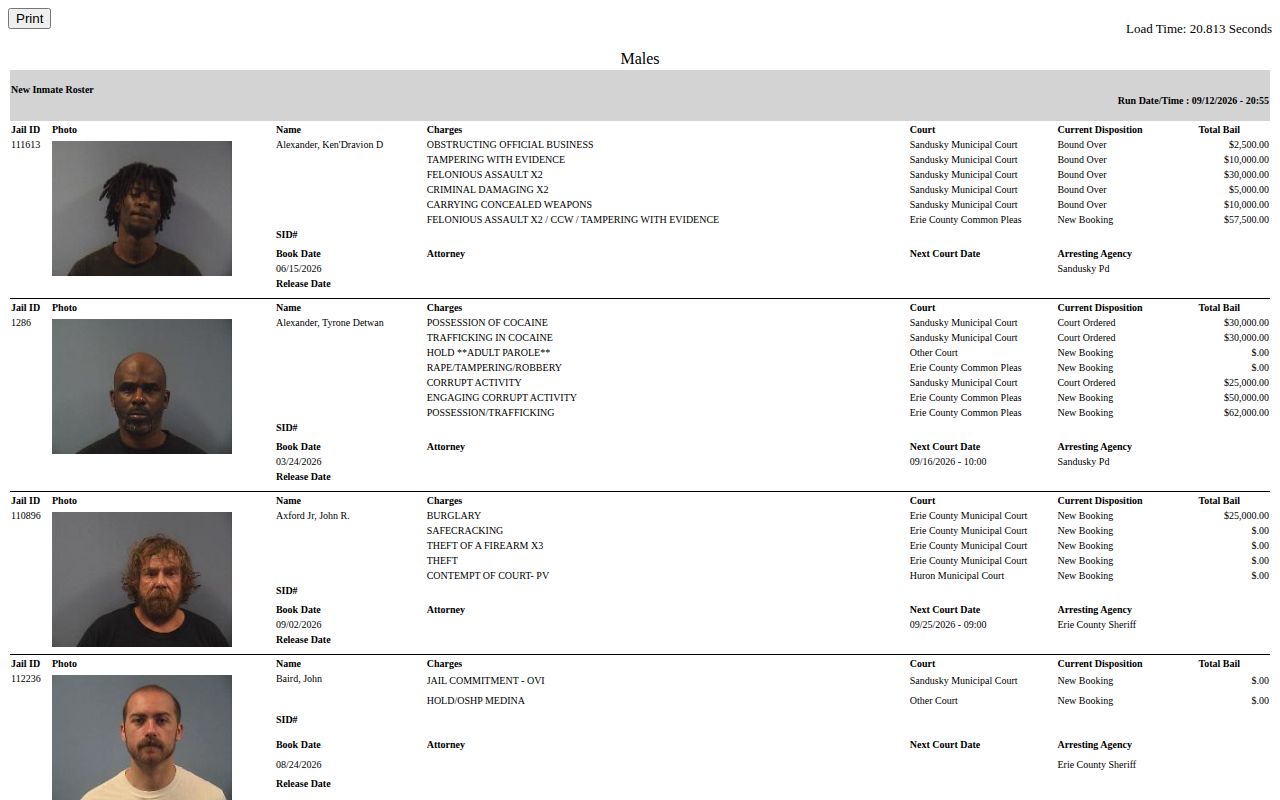
This shows the system, not its data. The live roster can differ on every visit.
Many Agencies Make Erie Arrests
Bookings in one Erie County roster come from many agencies. JDS entries include the Erie County Sheriff, Sandusky Police, Perkins Township Police, and Ohio State Highway Patrol Post 22. The Sheriff's Dispatch Center backs several agencies at once. So an "Erie County booking" does not mean a deputy made the arrest. Follow the arresting-agency and court fields next.
Use county Glyph for sheriff reports. A city Glyph portal covers city police records, and the listed court shows case status. The Erie County Sheriff mobile app carries safety news, tips, and crime reporting. It offers no jail roster, mugshot, or booking archive, so it cannot replace JDS. The app is not for emergencies. Call 911 when help is needed right away.
Erie County Arrests by City
City pages tie local police activity to county custody. Neither side is a complete arrest feed, and place, agency, jail, and court can all differ.
- Sandusky Recent Arrests: Sandusky Police uses city Glyph. People lodged at Erie County Jail can be matched in JDS by agency.
- Vermilion Recent Arrests: Vermilion crosses the Erie and Lorain county line. Its records and local blotters require a county and facility check.
- Huron Recent Arrests: Huron directs users to Glyph for reports and dispatch activity, while JDS answers current custody.
A city report may never create a county jail entry. A citation, quick release, or transfer can explain the gap. Match date, agency, report number, court, and facility.
Sandusky, the county seat, has its own court route. Vermilion is the tricky one. The incorporated city reaches into Lorain County. A Vermilion address alone does not prove Erie County custody. Huron posts its own police contact and report search, but no dedicated Huron booking roster. These local quirks make the arresting-agency field valuable. A city activity record and the Erie County jail roster can both be accurate. They show different slices of one event.
Erie County Arrest Record Fields
A booking happens when the jail takes someone in. The record can keep facts that vanish from a live roster later. Its fields capture the custody event, the charges recorded at booking, and the agency. They also capture the first court route. A disposition is the court's later result. That may be dismissal, acquittal, plea, conviction, or another ending.
| Field | What it shows |
|---|---|
| Name and identifiers | Identity attached to the jail record, including Jail ID or SID when available. |
| Booking date | When intake was recorded. |
| Charges | Initial charges, which can change. |
| Court and next date | Where to verify hearings and outcome. |
| Bail or bond | Amount or conditions shown at that stage. |
| Arresting agency | Law-enforcement agency tied to booking. |
| Booking photograph | Identification image associated with intake, when released. |
Important: Verify the court disposition before treating any booking field as current or final.
Check with the clerk for the latest record status.
Erie Arrest Mugshots and Photos
Booking photos in Erie County appear on the live JDS roster, which carries a Photo column with inline images for adult records. That makes the official roster the best source for a current Erie County booking photo. Display can shift with custody status. Policy, redaction, or the vendor running the system can also change what appears. The sheriff sets no fixed online photo-retention period.
When an image is missing or old, request the existing photograph from the sheriff custodian or the Jail Division. Release hinges on whether the record exists. Juvenile or victim details, investigative content, and retention rules can also block it. Ohio Department of Rehabilitation and Correction profiles may show offender photos for people in state prison or under DRC supervision. Those profiles are not current Erie County arrest records.
Unofficial sites such as RecentlyBooked, Ohio Arrests, Busted Newspaper, and Mugshots Zone can be stale, duplicated, or plain wrong after a release or a case change. Use them only as leads. Official channels settle the question. Confirm identity and custody with JDS and the court.
Request an Erie Arrest Record
The sheriff's Records Maintenance and Release policy follows Ohio Public Records Act principles. No written request is required. You need not identify yourself. Helpful identifiers simply speed the search. The office will not create a record that does not exist, may redact exempt details, and must explain any denial while releasing the non-exempt portions.
- Check Erie County Glyph by report number, party, date range, type, and report or upload date.
- For a booking sheet or photo, identify the full name, booking date, and Jail ID when known.
- Ask the sheriff custodian or Jail Division for the specific existing record.
- Request a current fee estimate. No universal booking-photo charge was verified.
- If material is withheld, ask for the legal basis and non-exempt remainder.
The Glyph footer lists the Records Department at 419-625-7951 extension 6250, weekdays from 8 a.m. to 5 p.m. Its fields appear in the official report search:
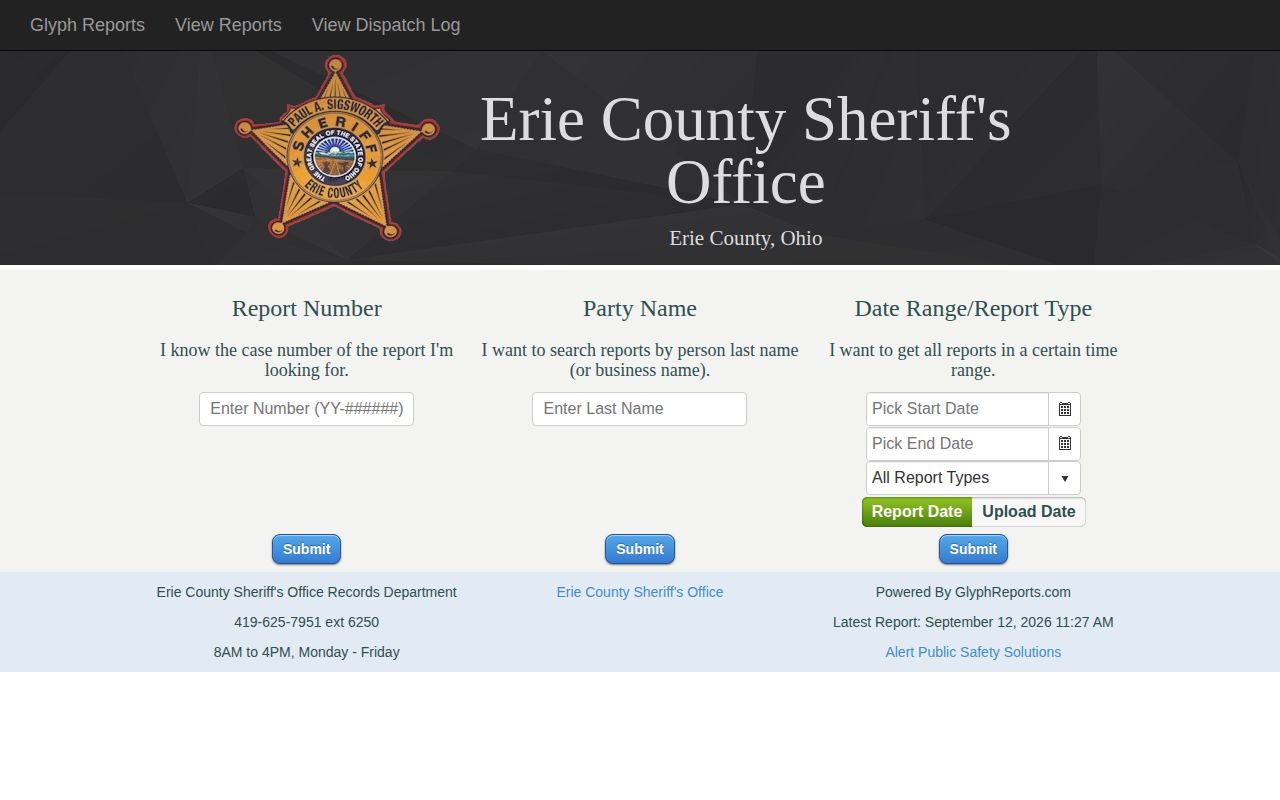
This portal covers incident and arrest reports. A tailored booking sheet or photograph may still need a direct request.
Name the record you want. Ask for a "booking sheet," "booking record," or "booking photograph," and add a date or Jail ID when known. If a city department made the arrest, request its incident report from that department. Get the jail document from the sheriff. Those are separate records from separate offices. Keep the response, redaction explanation, and case number. That lets a court file be matched later without relying on a name alone.
Ohio Arrest Records and Removal Law
Ohio Revised Code section 149.43 sets the public-records baseline, exemptions included. Erie County's policy applies that law to sheriff records. Sealed records stay out of public view. Expunged records are deleted permanently as the law allows. The county's sealing and expungement instructions walk through a signed petition, a hearing, eligibility limits, and forms. Fees may differ for dismissed or not-guilty matters, so confirm cost with the clerk.
ORC section 2927.22 targets publishers that charge a fee to remove, correct, alter, or withhold criminal-record information, booking photos included. Use official correction, sealing, and expungement routes. Never pay an unknown removal vendor. RecentlyBooked offers a free correction and removal policy, and Busted Newspaper links a listing-review route. Not every aggregator posts a current opt-out. The official Ohio law text preserves the anti-pay-to-remove source:
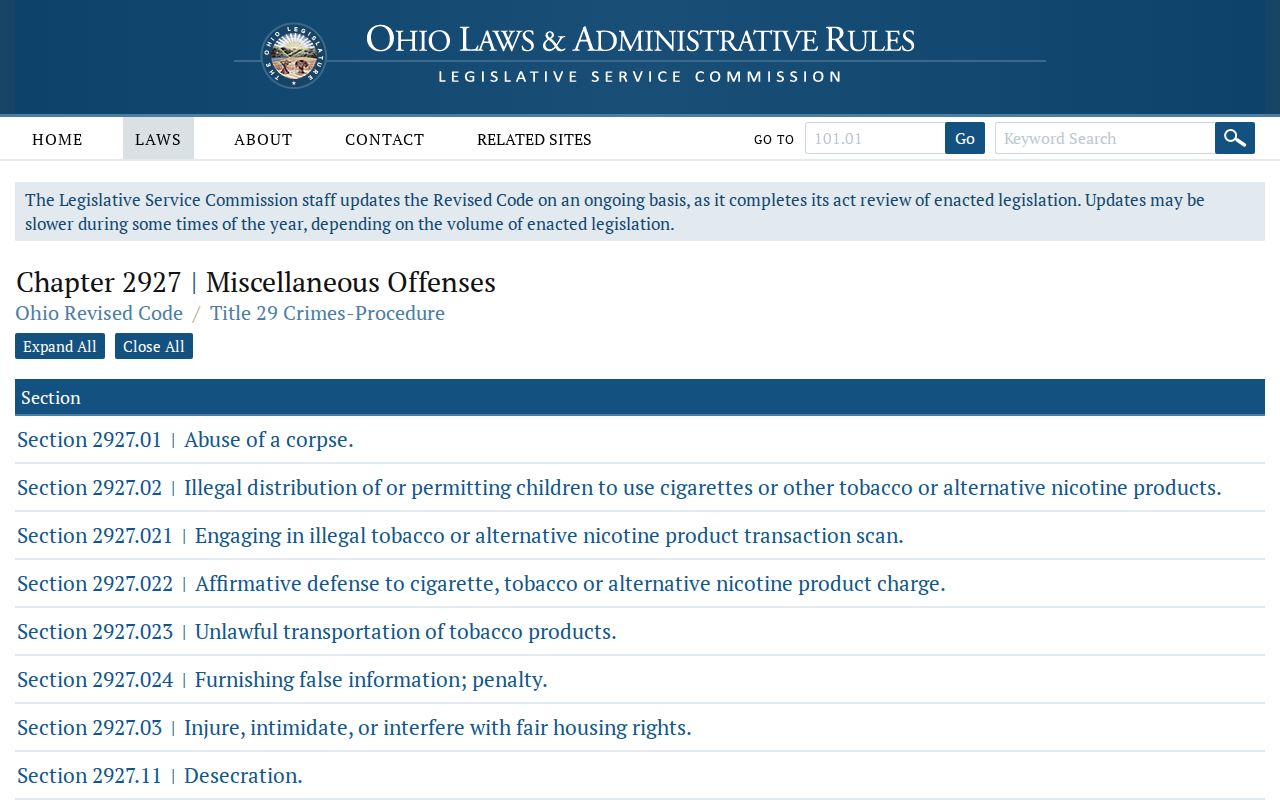
The law does not promise that every arrest record can be erased. Eligibility and remedies depend on the record and the court's order.
How Long Erie Arrest Records Last
The sheriff's retention schedule splits records people often treat as one file. Inmate count sheets are kept two years. Inmate files, booking sheets and jail narratives included, are kept two years after release. Jail registers are permanent. Microfilm is allowed under the schedule. Prisoner booking video is listed for 30 days when nothing is pending. No public-web period is set for JDS photos.
A permanent register is not a permanent online mugshot. Older searches follow three layers: current JDS first, then sheriff record requests and retention series, then historical archives. Bowling Green State University's Erie County guide identifies sheriff jail registers from 1909 through 1963. That archive aids history but not present custody.
The distinction matters most after release. A person can drop off the current roster while the booking sheet sits inside its retention period and a court case runs on. A third-party copy may outlast both official displays. For a recent status, go back to JDS, the jail, and the court. For an older record, identify the sheriff's record series and date range. For a historical register, use the archival route.
Official sources sometimes change while search results still show old text or an image. Google's Refresh Outdated Content tool can update the cached result. It will not remove a live page, so correct the source first and then seek an index refresh.
Erie Arrest Warrants and Wanted Notices
The sheriff posts two useful Erie County tools: a Glyph warrant list and a Most Wanted page. A warrant is simply a court order. It authorizes an arrest or another stated action by law enforcement. Entries can shift fast, though. A warrant may be served, recalled, corrected, or matched to the wrong person. The issuing court, the agency, or a lawyer can confirm whether it is still active.
The Most Wanted page offers tip instructions and a Detective Bureau number, 419-627-7553. No standing list of names appears on it. Treat wanted notices carefully. Do not approach, follow, or confront anyone named. Call 911 if danger is immediate. For non-emergency tips, use the official route. The ODRC parole-violator source covers state supervision, not Erie County warrants.
After an Erie County Arrest
Arraignment comes early in the process. That is where a plea is entered and bond may be set. Bond is a release condition the court imposes. According to Erie County's Jail FAQ, payment steps vary by court. The page describes money orders payable to the court. It also lays out different surety rules. Vermilion Municipal Court gets an exception of its own. Confirm the right court and its current instructions before sending money.
The Erie County Municipal Court search matches a name or case number. Online entries can lag a day or more. Verified facts take a court request. An in-person visit works too. Felony cases live in the Clerk Public Information Case System. A JDS result may instead point to Sandusky, Huron, or Vermilion Municipal Court.
- Booking
- Jail intake recording identity, charges, property, and custody facts.
- Arraignment
- Early hearing for a plea and often bond.
- Disposition
- Court outcome, which may include dismissal, acquittal, plea, or conviction.
- Expungement
- Deletion of an eligible record through Ohio’s legal process.
An Erie County case moves from booking to roster, then arraignment, later hearings, and final outcome. Every step can rewrite a field from the first arrest record.
Custody Beyond Erie Arrest Records
Someone serving time in state prison falls under the Ohio Department of Rehabilitation and Correction Offender Search. DRC supervision counts too. Search fields cover name, county of commitment, residential county, ZIP, status, parole-board date, and OR number. Note that an OR number differs from a county Jail ID. A fresh Erie County booking usually has no ODRC profile until the person enters a listed DRC status.
Federal custody works differently. The Federal Bureau of Prisons locator stands apart and shows no Erie County booking photos. For immigration holds, DHS-VINE is its own route. Some people held under ICE investigative authority never appear there. Erie County lists no ICE detention arrangement of its own.
Once someone turns up in county custody, the VINELink Check walks through Ohio VINE searches plus release and transfer alerts. VINE sends notifications. It does not archive arrests. For urgent questions, contact the jail and the court.